

Amaury, p.1
AMAURY, page 1


AMAURY
Translated by Alfred Allinson
First published in 1843, this tragic-comic romance novel is set in the countryside outside Paris in 1838 and tells the story of a dying consumptive.
The novel opens with a group of French aristocrats conversing about the nature of love. One of them asks the question, "Meurt-on d'amour?" (Does one die of love?) In response, one them pulls forth a manuscript that purports to be the diary and letters of the family of the deceased M. d'Avrigny, widower and court physician to the King. The novel is nominally composed of the diary and letters being read aloud.
In the tale, Amaury de Leoville, young, wealthy, but orphaned, is beginning his career in the French diplomatic service. Amaury was raised by M. d'Avrigny, a friend of his late father, along side d'Avrigny's frail blonde daughter, Madeleine, and yet another orphan, the vigorous dark-haired Antoinette.
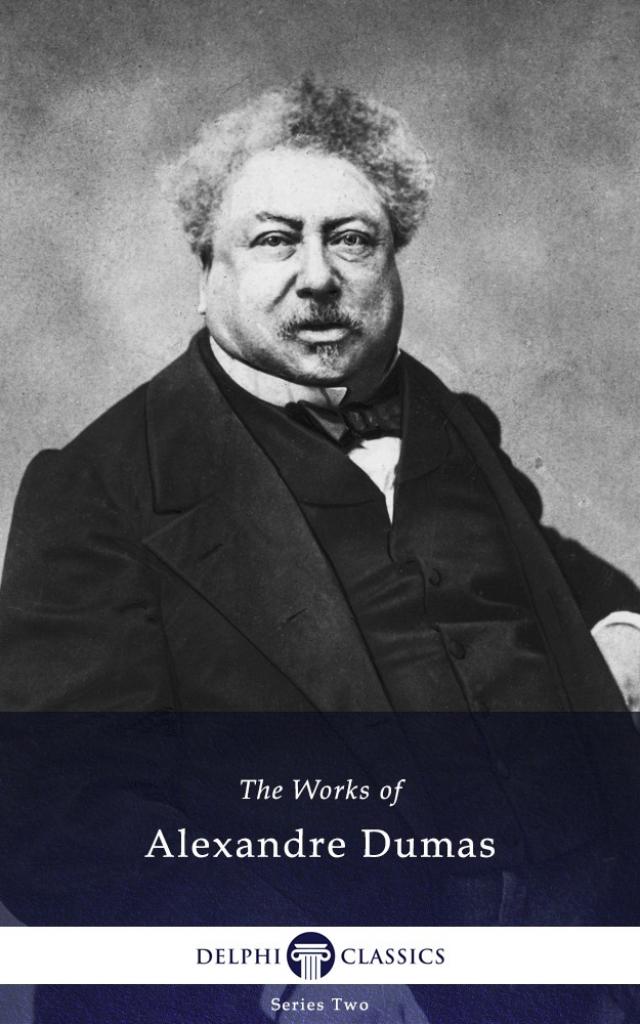
Dumas, close the the time of publication
CONTENTS
INTRODUCTION
AMAURY.
CHAPTER I.
CHAPTER II.
CHAPTER III.
CHAPTER IV.
CHAPTER V.
CHAPTER VI.
CHAPTER VII.
CHAPTER VIII.
CHAPTER IX.
CHAPTER X.
CHAPTER XI.
CHAPTER XII.
CHAPTER XIII
CHAPTER XIV.
CHAPTER XV.
CHAPTER XVI.
CHAPTER XVII.
CHAPTER XVIII.
CHAPTER XIX.
CHAPTER XX.
CHAPTER XXI.
CHAPTER XXII.
CHAPTER XXIII.
CHAPTER XXIV.
CHAPTER XXV.
CHAPTER XXVI.
CHAPTER XXVII.
CHAPTER XXVIII.
CHAPTER XXIX.
CHAPTER XXX.
CHAPTER XXXI.
CHAPTER XXXII.
CHAPTER XXXIII.
CHAPTER XXXIV.
CHAPTER XXXV.
CHAPTER XXXVI.
CHAPTER XXXVII.
CHAPTER XXXVIII.
CHAPTER XXXIX.
CHAPTER XL.
CHAPTER XLI.
CHAPTER XLII.
CHAPTER XLIII.
CHAPTER XLIV.
CHAPTER XLV.
CHAPTER XLVI.
CHAPTER XLVII.
CHAPTER XLVIII.
CHAPTER XLIX.
CHAPTER L.
CHAPTER LI.
CHAPTER LII.
CHAPTER LIII.
CHAPTER LIV.
CHAPTER LV.
CONCLUSION.
INTRODUCTION
“WHEN I write finis to one book, it merely means I am beginning another,” Dumas says somewhere of himself, and his literary “output” for the year 1844 amply justifies the statement. This was the “great year,” — the year of Monte Cristo and The Three Musketeers; but it saw the birth of quite a brood of minor romances as well, — Fernande, Gabriel Lambert, Sylvandire, and last, but not least, Amaury.
The book is not, of course, one of the “great” romances, in the sense in which The Three Musketeers, or The Chevalier (l’Harmental, or The Chevalier de Maison Rouge, or The Lady of Monsoreau, deserve that title; but it is a pathetic and beautiful story.
The tale is supposed to be told, or rather read aloud, under the following circumstances: M. le Comte de M — , an old aristocrat who has survived the Revolution and all subsequent and successive bouleversements, and has known Rousseau and Voltaire, Franklin and André Chenier, Talleyrand and Mme. de Staël, Chateaubriand and Mme. Récamier, the Empress Josephine and the Duchesse de Berri, — still holds one of those “salons” where discussions were held “de omnibus rebus et quibusdam aliis” with all the wit and wisdom of cultivated Frenchmen and Frenchwomen and all the urbanity of the ancien régime. He writes on his invitation cards “Conversation.” where commonplace hostesses put “Dancing”; “the word keeps bankers and stockbrokers away, but it attracts wits who like to talk and poets who like to listen.” The Count “is one of the last and one of the most delightful representatives of the poor much-maligned Eighteenth Century. There are not a great many things he believes in himself, but, unlike the majority of free-thinkers, he has no sort of wish to make other people share his incredulity.”
On one of his evenings the question is started, “Meur-ton d’amour?” — ” Do people die of love?” By way of answer the Count directs his secretary to read aloud to the company a manuscript bequeathed to him by a dead friend. “They are written experiences,” he explains, “from that friend’s life. He was a famous Parisian physician; therefore these memoirs are nothing but — pardon the expression — a long -post-mortem examination. Oh! do not be alarmed, ladies, — a mental post-mortem performed not with the scalpel, but the pen, one of those post-mortems of the heart at which you so love to assist.” With this document was combined another diary, that kept by Doctor D’Avrigny’s ward and his daughter’s fianci, Amaury de Léoville; the two together give the life-story of the loves of Madeleine D’Avrigny and Amaury, the lingering death of the former and the eventual union of the latter with his lost darling’s cousin and friend, Antoinette de Valgenceuse.
In connection with the first publication of the book as a feuilleton in “La Presse,” Dumas was asked by M. de Noailles, whose daughter was “poitrinaire,” like the heroine of the romance, and who was so intensely interested in the successive instalments of the story as seriously to aggravate the symptoms of her illness, to suspend the publication, if Madeleine was to die. This the kind-hearted author did, and even took the trouble, some versions of the story add, to improvise in manuscript a miraculous recovery and happy ending for the special benefit of Mlle, de Noailles. Publication was only resumed after her death.
The details of the disease and its progress had been studied by Dumas from the case of a companion of his own boyhood, Félix Deviolaine, son of his gusty-tempered relative, M. Deviolaine, Inspector of the Royal Forest of Villers-Cotterets (it was cut down subsequently by Louis Philippe), whose house and household, and especially his girls — Cécile, who saved Dumas from being made a priest, and the rest — young Dumas’ playmates and tormentors, were such important factors in the future great man’s early days. The lad in question went through all the phases of pulmonary consumption, but eventually, almost by a miracle, recovered.
Dumas is said to have written Amaury in collaboration with Paul Meurice. Well and good! very likely he did. But to say, because in the Introductory portion, of which we have given the gist above, the Comte de M — , explaining the facts about the manuscript his secretary is going to read, declares “you must be under the impression that I am the author of this story, therefore I wish it to be clearly understood that I did not invent a word of it,” — to say on the strength of this that Dumas disavows the authorship, is surely to confound fact and fiction.
The book was originally published — after running through the pages of “La Presse” — as part of the Bibliothique des Romans Nouveaux issued by Hippolyte Souverain, of which it fills four volumes, — Paris, 1844.
AMAURY.
ONE thing there is, peculiar to France and all but unknown in all countries of Europe, — to wit the art of conversation.
In all parts of the world people discuss, they talk, they argue; but only in France do they converse.
When staying in Italy, in Germany, or in England, I would sometimes announce at a moment’s notice that I was starting next day for Paris; then my friends, astounded at so sudden a decision, would ask:
“But what are you going to do in “Paris?” — to which I would reply: “I am going to enjoy a bout of conversation.”
At this everybody would be still further amazed, marvelling how a man, wearied out with talking and hearing others talk, should be taking a journey of a thousand miles, merely to have some conversation.
Only my fellow-countrymen understood, and they would say enviously, “Lucky dog! ah, you lucky dog!”
Nay! Sometimes one or two of my French companions in exile who could get away with least difficulty, would slip their chain and come with me.
I know of nothing more delightful than these little gatherings, in the corner of an elegant salon, when five or six congenial guests toss the ball of conversation lightly to and fro. All is governed by the whim of the moment; now an idea is seized and followed up, but only so long as it is interesting, to be thrown aside directly its zest is exhausted; now a fresh topic is taken up, which in its turn broadens and deepens under the jests of some, the contradictions of others, the wit of all. Then, suddenly, having reached the height of its brilliance, the zenith of its development, it too disappears, melts away, bursts like a soap-bubble, at the touch of the hostess, who, carrying a cup of tea in her hand, draws near, a living shuttle that passes from group to group, guiding the silver thread of general conversation, asking the news, consulting opinions, suggesting problems, and from time to time compelling each little coterie to throw its word into that cask of the Danaïds we call conversation.
There are in Paris five or six such salons as I have been describing, where there is no dancing, no singing, no card- playing, and yet where no one takes his leave before three or four o’clock in the morning.
One such salon is that of my old friend Count de M — ; instead of calling him my old friend, I should rather have said an old friend of my father’s, as Count de M — , who is careful never to tell his age, and whom certainly no one would ever think of questioning on that point, must be between sixt
He is the victim of two conflicting principles, one which emanates from the heart, the other from the head. Selfish in theory, he is naturally of a generous disposition. Born in the age of noblemen and philosophers, in him the aristocrat is stronger than the philosopher, though he has been fortunate enough to see all the great and intellectual lights of the last century. Rousseau called him citizen; Voltaire predicted that he would be a poet; Franklin told him to be an honest man.
He can tell of the horrors of ‘93 as the Comte de Saint-Germain talked of the proscriptions of Sylla, and the butcheries of Nero. He has seen them all pass by one after the other, with an equal distrust for them all, — murderers and massacres, men of September and men of the guillotine, first in their car of triumph, then in their cart of ignominy. He has known Florian and André Chénier, Demoustier and Mme. de Staël, the Chevalier de Bertin and Chateaubriand; he has kissed the hand of Mme. Tallien, of Mme. Récamier, of the Princess Borghèse, of Joséphine, and of the Duchesse de Berri. He has seen the rise of Bonaparte and the fall of Napoleon. The Abbé Maury called him his pupil, and Monsieur de Talleyrand his disciple; he is a dictionary of dates, an epitome of facts, a hand-book of anecdotes, an inexhaustible mine of witticisms. To make sure of keeping his reputation for superiority, he has always refused to write his experiences; he will only relate them.
Therefore, as I was saying, his salon is one of the five or six in Paris where, though there is neither card-playing, nor music, nor dancing, no one leaves before three or four o’clock in the morning. True, on his invitation cards is written with his own hand: “Conversation,” where others usually have printed: “Dancing.”
The word keeps bankers and stockbrokers away; but it attracts wits who like to talk, poets who like to listen, and misanthropes of every sort, who despise all the entreaties of enterprising hostesses, never venture to take the floor, and pretend to believe that a valse à trois temps is so called because it is three times as impossible as any other dance.
Moreover he has a rare tact in turning the conversation by a word from subjects likely to wound other people’s feelings, and of cutting short discussions which threaten to become tedious.
A young man with long hair and a long beard was one day discussing Robespierre in his presence; he praised his system, lamented his untimely death and predicted his ultimate rehabilitation. “Future generations have yet to record their verdict.”
“Luckily for us, past generations did record theirs, — and it was the guillotine,” replied the Count de M — , and there the subject dropped.
Now about a month ago I happened to be at one of these evenings when, all other topics of conversation being pretty well exhausted, somebody, probably not knowing what else to talk about, started the subject of love.
It happened to be just one of those moments when conversation becomes general, and when words are bandied about from one end of the room to the other.
“Who speaks of love?” asked Count de M — .
“Doctor P — ,” replied a voice.
“And what has he to say about it?”
“He says it is a mild form of congestion of the brain, which may easily be cured by diet, leeches and bleeding.”
“Do you really believe that, doctor?”
“Yes! though of course to possess the object of one’s love is even better; it is a quicker and more certain cure.”
“But, for the sake of argument, let us suppose that one’s love is not returned, and that the patient does not go to you, who have discovered the universal panacea, but to a fellow practitioner, not so learned as yourself in the disease, what then? Do folks die of love?”
“Egad! That is a question which the patient is better able to answer than the physician,” retorted the doctor. “Come, gentlemen, answer. Ladies, what is your opinion?”
One can easily understand that on so interesting a subject opinions were divided.
The young folk, who had long years before them in which to die of despair, answered yes; the old people, to whom time now could bring nothing worse than influenza or gout, answered no. The women tossed their heads doubtfully, but said nothing, — too proud to say no, too truthful to say yes.
Each one was so anxious to express his own views that it ended in a general misunderstanding.
“Well!” said Count de M — , “I see I must help you out of the difficulty.”
“You!”
“Yes! I.”
“How can you do that?”
“By telling you what is the difference between a love that kills and a love that does not kill.”
“Then there are different kinds of love?” asked a woman, who of all the company present was perhaps the least justified in asking this particular question.
“Yes, Madam,” answered the Count, “but at present I think there would hardly be time to enumerate them all.
“Let us therefore go back to my original proposition. It is nearly midnight; therefore we have still two or three hours before us. You are all cosily ensconced in armchairs, and the fire burns bright on the hearth. Outside, it is a cold night, and snow is falling. At last, therefore, fate is kind in providing me with an audience such as I have long waited for. I have got you, and I won’t let you escape. Auguste, see that the doors are shut, and bring me the MS.; you know the one.”
A young man got up, he was Count de M — ’s secretary, a distinguished-looking young fellow, whose position in the house, it was rumoured, was by right of a closer relationship than was apparent; and, certainly, the fatherly affection with which Count de M — regarded him gave some colour to the rumour.
Eagerness and impatience were manifested by all directly he mentioned the word “manuscript.”
“Pardon me,” said the Count, “but no novel ever begins without a preface, and I have not yet come to the end of mine. You might be under the impression that I am the author of this story, therefore I wish it to be clearly understood that I have never invented one word of it. This is how the story I am going to read you came to my knowledge. As executor to a friend of mine who died eighteen months ago, I was looking over his papers, and, in doing so, came across these memoirs; but let me say at once, they are written experiences from his own life, not from the lives of others. He was a doctor; therefore, pardon the expression, these memoirs are nothing but a long post-mortem examination. Oh! do not be alarmed, ladies; a mental post-mortem, a post-mortem performed not with the scalpel, but with the pen, one of those post-mortems of the heart at which you so love to assist.
“A second diary, in a different handwriting, was mixed up with his reminiscences, just as the biography of Kressler is mixed up with the lucubrations of Murr, the cat. I recognised this handwriting at once; it was that of his ward, a young man whom I had often met at his house.
“These two manuscripts, which, taken separately, made but an unintelligible story, when read together formed a complete whole. I have read them, and to me the story was full of — what shall I say? — full of pathos. I was deeply interested in it, and seeing I am generally looked upon as a scoffer (you all know that I have the reputation of being one, happy they who can boast of any special reputation) — I say, considering I am a scoffer, and that my interest is not often keenly awakened, it seemed to me that as this story had so touched my heart, — you must pardon my making use of the word, doctor, I am well aware that, in that sense, there is no such thing as a heart, but unless I keep to the ordinary term I may not be understood, — I thought then that, if this story had so touched the heart of an old scoffer like myself, it might make a like impression on others; then, to be perfectly frank, a little touch of vanity was mixed up with the matter too. I was afraid that, if I committed this to writing, my reputation as a man of letters might melt into thin air, as did that of M — , — I cannot recall his name for the moment, but you all know whom I mean, he has since become a minister of State. I therefore classified the two diaries, numbered each in the order in which it should be read to make a connected story; then I erased the real names, and replaced them by others of my own invention; lastly I substituted the third person for the first, and one fine day awoke to find myself the possessor of a couple of volumes.”


__english_preview.jpg)






