Needle, p.1
Needle, page 1


Needle
Craig Jordan Goodman
Copyright 2006, 2012 by Craig Goodman
All rights reserved. No part of this book may be reproduced in any form or by any electronic or mechanical means, or the facilitation thereof, including information storage and retrieval systems, without permission in writing from the author, except by a reviewer, who may quote brief passages in a review. Any members of educational institutions wishing to use part or all of the work for classroom purposes, or publishers interested in obtaining permission to include the work in an anthology, should send their inquiries to RadioFreePublications@yahoo.com.
Printed in the United States of America
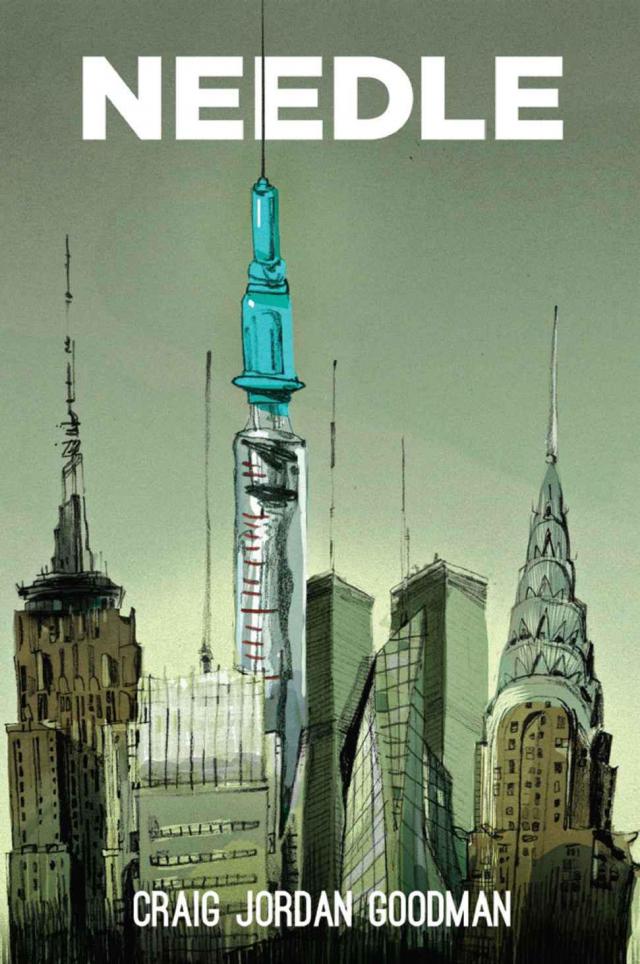
Cover art and design by Vince Joy
For David Minter—without whom I would have never thought this worthy, Theron Raines—without whom I would have never thought this possible, and Emily—without whom this would have never been written…or, it would have been written a hell of a lot faster than it was.
Mostly though, it’s for the dogs.
The events depicted here are true. Sometimes, I wish they weren’t. That said, certain identifying names, characteristics, dates and places have been changed to protect anonymity. A few individuals are composites, some timelines have been expanded or compressed, and some of the dialogue has been recreated or reconstructed to help support the narrative, and to clarify and illuminate critical aspects of the story.
Needle
Contents
Chapter One
Chapter 2
Chapter 3
Chapter 4
Chapter 5
Chapter 6
Chapter 7
Chapter 8
Chapter 9
Chapter 10
Chapter 11
Chapter 12
Chapter 13
Chapter 14
Chapter 15
Chapter 16
Chapter 17
Chapter 18
Chapter 19
Chapter 20
Chapter 21
Chapter 22
Chapter 23
Chapter 24
Chapter 25
Chapter 26
Chapter 27
Chapter 28
Chapter 29
Chapter 30
Chapter 31
Chapter 32
Chapter 33
Chapter 34
Chapter 35
Chapter 36
Chapter 37
Chapter 38
Chapter 39
Chapter 40
Chapter 41
Chapter 42
Chapter 43
Chapter 44
Chapter 45
Chapter 46
Chapter 47
Chapter 48
Chapter 49
Chapter 50
Chapter 51
Chapter 52
Chapter 53
Chapter 54
Chapter 55
Chapter 56
Chapter 57
Chapter 58
Chapter 59
Chapter 60
Chapter 61
Chapter 62
Chapter 63
Chapter 64
Chapter 65
Chapter 66
Chapter 67
Chapter 68
Chapter 69
Chapter 70
Chapter 71
Chapter 72
Chapter 73
Chapter 74
Chapter 75
Chapter 76
Chapter 77
Chapter 78
Chapter 79
Chapter 80
Chapter 81
Chapter 82
Chapter 83
Chapter 84
Chapter 85
Chapter 86
Chapter 87
Chapter 88
Chapter 89
Chapter 90
Chapter 91
Chapter 92
Chapter 93
Chapter 94
Chapter 95
Chapter 96
The Aftermath
One
“I don’t think this is such a good idea.”
“What’s not such a good idea?”
“It’s a lot, Craig.”
“Don’t worry about it,” I told him.
“No way—this is too much.”
“That’s ridiculous.”
“You’re gonna be sorry,” he said.
“Don’t worry about it.”
“No, seriously—”
“DON’T WORRY ABOUT IT.”
So he didn’t…and then I must have vomited on myself.
###
The last thing I recall before the warm, momentary tightness lost its grip on my heart and began creeping upward, was telling Perry to keep his filthy hands away from me. Suddenly, and without provocation, he had lunged at me and my temper flared. After all, I was wearing my nicest shirt. It was silk or black or satin or something, and as he clawed at my finest garment with an outstretched hand I could hear the seams begin to give way. I then remember slapping at his dirty paw until I was finally free to meet fate, headfirst, at the bottom of a staircase.
For exactly how long I lay there, unconscious, on the 17th floor of a Harlem housing project remains a mystery. What I do know is that when I awoke my head had a couple of bumps, my right shoulder was swollen, and my fancy shirt was covered with semidry puke. Perry, however, was nowhere to be found and in his place were a concerned EMT, a relieved/amused firefighter, a disgusted cop and a few residents who were quite disenchanted by the junky white boy with the nerve to have overdosed in their stairwell.
As I gradually came to, the fear of being incarcerated pierced my consciousness along with a dawning awareness as to what had just happened. I already had an outstanding warrant for my arrest, so the last thing I needed right now was to get locked up…again.
The old warrant had been issued back in 1995 after I elected not to appear in court. I was supposed to contest a flimsy trespassing charge filed by a cop with a sneaking suspicion that I might not actually be looking for “maintenance work” in the abandoned Harlem brownstone he found me in. In fact, he was so sure that I was up to no good that he also tacked on an intent to purchase narcotics charge to better justify an arrest, even though there wasn’t a stitch evidence to support the added allegation. The officer was—of course—entirely correct in his suspicions, but it was clear to me that he wasn’t playing by the rules and so—neither did I. Hence, after the court date was ignored, the resulting warrant along with the initial charges would go unaddressed for eight months, as I imposed my own brand of self-serving justice upon a legal system I saw as clearly corrupt.
Upon emerging from the overdose and regaining consciousness in the staircase I made a snap decision. I would use valium as a defense strategy to hopefully avoid arrest, as well as the warrant-driven fallout sure to follow. Valium is a much more socially acceptable drug to abuse, and Perry had already removed any evidence that might expose heroin as the true culprit. I was also fortunate enough to be in the presence of not only a police officer but other municipal employees as well, so as long as I avoided dropping the H-bomb I thought I’d survive without going to jail.
Although the logic behind the valium-defense was sound—its execution was a bit shoddy, and as the cop maneuvered himself to get a better look at me I lost some composure.
“IT WAS THE VALIUM, IT WAS THE VALIUM!!!” I screamed before anyone even said a word to me. “I SWEAR TO GOD, BROTHA! IT WAS THE FUCKING VALIUM!!!”
Of course, all parties present—including the cop—knew that nausea is a common side effect of shooting dope, and the vomit-laden shirt and condition they found me in certainly didn’t help bolster the defense strategy. In fact, had the firefighter and paramedic not been first to arrive, things would have ended up quite differently. Typically, whether in possession of drugs or not, an overly medicated white boy covered in puke and lying in a Harlem stairwell would have been just too much for any blue-blooded New York City police officer to resist. And certainly, unconscious and sprawled out on the stairway floor, it would’ve been difficult to argue what now should be the most rock solid trespassing charge in city history. I was extremely lucky. The worried EMT and relieved firefighter proved to be my saviors as the cop was simply outnumbered by his truly concerned, fellow civil servants.
Score one for the junky.
They sat me atop a gurney, wheeled me to an elevator, and then rolled me out of the building to an ambulance on 124th Street amidst a throng of smiling black faces that seemed to take gleeful satisfaction in the proceedings. Some of the little kids were actually dancing.
When I arrived at Metropolitan Hospital the EMT transported me to an emergency room hallway and said, “Whatever you do, promise me you won’t leave.”
“OK.”
That day, about a half-hour after I overdosed, Perry and I were scheduled to meet with Bob Donnelly, music lawyer extraordinaire. Donnelly’s list of clients included the Dave Matthews Band, Aerosmith and Def Leppard—just to name a few. Here was a man who could help transform ordinary potential into extraordinary success, and if our band was half as talented, beautiful, and skinny as we thought it was—the sky was absolutely the limit.
Did I mention that our egos were utterly enormous? An egomaniac with a penchant for shooting dope can take that false sense of well being and really run with it. Once addicted to heroin, junkies are bestowed magical, dissociative powers as we see life deteriorate before our very eyes and remain truly unaffected. However, a heroin addict with some sort of t
Due to the unscheduled overdose, I missed the big meeting with Mr. Donnelly. As a result, I was especially determined not to waste what was left of the day sitting in a hospital just because I insisted on doing a little too much dope. Now able to walk, more or less, I left the medical facility to enjoy what was left of my nod in Central Park and half-consciously thought about nothing for several hours. Life was good again and things were finally back on track, as the setting sun and emerging lights reflected against the metallic mountains and I was gently nudged from my peaceful inner space.
2
Now, the backstory:
In September of 1973 my father died from lung cancer. Later that year, my mother learned that he and I had been cheating on her with his secretary, Phyllis. I was only four years old at the time of the infidelity, but as far as Mother was concerned we were partners in crime and the illicit affair was a father/son conspiracy.
I can very clearly recall the moment I had first learned of his passing. It occurred while returning home to Queens after an extended visit with my grandparents in the Bronx. My younger sister, Celine, and I had been spending a good deal of time there while my mother inconspicuously made funeral arrangements, and as we headed home the question came out of nowhere.
“Mommy…Did Daddy die?”
To this day I have no idea what provoked it, but as I asked the question I remember desperately hoping yet truly expecting her to say, “Of course not, you silly goose!!! Your Daddy isn’t dead—he’s just at the office,” or “in a meeting,” or “on a business trip.” Instead, she simply turned her head and looked back at me for a moment. Then, after pulling the car to the side of the road, in a very calm and all too collected voice she said, “Yes, Craig. Your dad died…but he really, really, loved you a lot.”
I hadn’t seen him in quite some time, but the possibility that he had died only occurred to me half seriously and literally as I posed the question. Hence, the affirmative answer I received should have elicited some outpouring of emotion; however, there wasn’t a teardrop in sight or even a follow-up question. Mother just laid it out there as she turned herself around, put the car back in drive, and continued home to Queens.
I didn’t attend my father’s funeral. I have never visited his gravesite. In fact, I don’t even know where it is. He was tucked away before I ever knew he was missing.
Without question I was the apple of Daddy’s eye, and almost every evening he brought me a gift home from work. From my bedroom I would listen for the bell, and then in a snap—like one of Pavlov’s drooling dogs—I’d be at the door to collect my prize. Of course, every so often he’d come home empty handed and I’d be traumatized with disappointment. Although on these rare occasions I’d be smart enough not to publicly display any signs of grief, I clearly recall skulking back to my room and flinging my body across the bed in very dramatic though truly uncontrollable fits of weeping hysteria.
Spoiled-rotten, crybaby-bitch.
Now and then, after considerable begging, he would take me with him to work in Manhattan. His offices were located near the Flatiron Building in a Helmsley property that housed showrooms for the world’s leading toy manufacturers. My father was president of a company called Intoport, where after years of fruitless business efforts he’d finally struck it rich manufacturing transistor radios that bore the likenesses of Mickey Mouse and Donald Duck.
My father was one of the first to truly realize the merchandising potential of Disney, and I soon realized that going off to work with Daddy could be almost as lucrative, as my four-year-old demeanor and a head full of curly red hair would tug at the heartstrings of young secretaries and toy reps from every corner of the building. The moment we arrived, pretty young women—perhaps trying to quell the steady ticking of maternal clocks—began filing into his office with gifts of product samples for none other than yours truly. I got tremendous mileage out of those curls and apparently, in terms of ass, my father did equally as well.
An afternoon of ice skating at Rockefeller Center with Daddy and Phyllis eventually led to my life-altering confession. Though it resulted in years of retribution, I can only recall this one instance of my father’s—I mean our infidelity. It stood out not because of where we were or who we were with, but because I clearly remembered his advice:
“Don’t tell mommy…It’s a surprise!”
A surprise? Brilliant!!! A surprise would surely guarantee I’d shut my mouth and not ruin all the careful work and thoughtful planning that went into my father fucking his secretary.
Much to his advantage, my father died before my mother became aware of the marital transgression, leaving me alone to carry the brutal baggage for both of us. Then again, I was the one who let the cat out of the bag, so perhaps in some strange way I got just what I deserved.
I made the big disclosure on Christmas Day at the Queens residence of my Aunt Rosie and her family, about three months after my father’s death. That fateful evening, as I sat on the kitchen floor with the dog while Aunt Rosie quietly washed the dishes, I suddenly remembered the previous holiday spent with Daddy and Phyllis beneath the gigantic Christmas tree. Then, out of nowhere it all came rushing back:
Oh my gosh…The Surprise! What about the big surprise for Mommy?!?
I was suddenly overcome by the horrible feeling that I might be missing out on something. Everyone knows that “a surprise” calls for cake, candy, and of course—wrapping paper and presents. Now granted, the surprise wasn’t for me, but past experience indicated that I would certainly be a beneficiary, and there was just no way in hell I was going to let something as trivial as a dead father stand between me and a good time.
“Aunt Rosie! Aunt Rosie!!!” I shouted with all the passion and excitement the not-so-late-breaking news seemed to warrant. “Guess what!”
“What’s that, Craig?” she asked with a big grin.
“Daddy took me ice skating at Rockefeller Center with Phyllis!” I gleefully shouted. “But don’t tell Mommy because IT’S A SURPRISE!!!”
Aunt Rosie stopped doing the dishes.
“It certainly is,” my mother’s sister agreed.
I don’t quite remember the immediate fallout—but there definitely wasn’t any cake. Soon afterwards, however, it became clear that due to the confession I’d been branded a co-conspirator and sentenced to a childhood of physical punishment for Daddy’s adultery. The notion that given my age, I might not be responsible for my actions—never factored into the equation. As far as Mother was concerned, I knew what was going on and did nothing to prevent it.
3
I would like nothing better than to blame my mother for the drug problems I experienced as a young adult. It would be incredibly easy to manufacture a connection between the daily, physical and emotional abuse she doled out and the poor choices I made later on. Though there definitely were external forces that contributed to my undoing, I would have to say that I don’t include my mother with that group of factors. If she is a factor in some way, I would consider her to be a subconscious influence—if there even is such a thing.
Ironically, my tendency to categorically reject a dysfunctional childhood as cause for adult dysfunction stems from my mother’s attempt to use it to justify her own abhorrent behavior. Years later, she gave me a half-assed apology along with the standard excuses: it was an inherited cycle; she was slapped around as a child at the hands of her old-school, Italian father (as was he); and the times and norms were different back then. Her rationalizations sickened me, as I would relive endless nighttime beatings followed by early-morning rehearsals of explanations for the new laceration or bruise.
I remember some nights underestimating her endurance and falling asleep, only to be ripped back into consciousness with a burning smash to the face. Then dazed, I’d run wildly down dark, endless hallways desperately looking for a way out and yet always knowing there wasn’t anywhere to go. Mother had conditioned Celine and me into believing that the moment we tried to escape, she would call the police and we’d be hunted down and cast off to reform school. What exactly “reform school” was nobody seemed to know, but if Mother was threatening us with it then surely it must have been a fate worse than life with her.