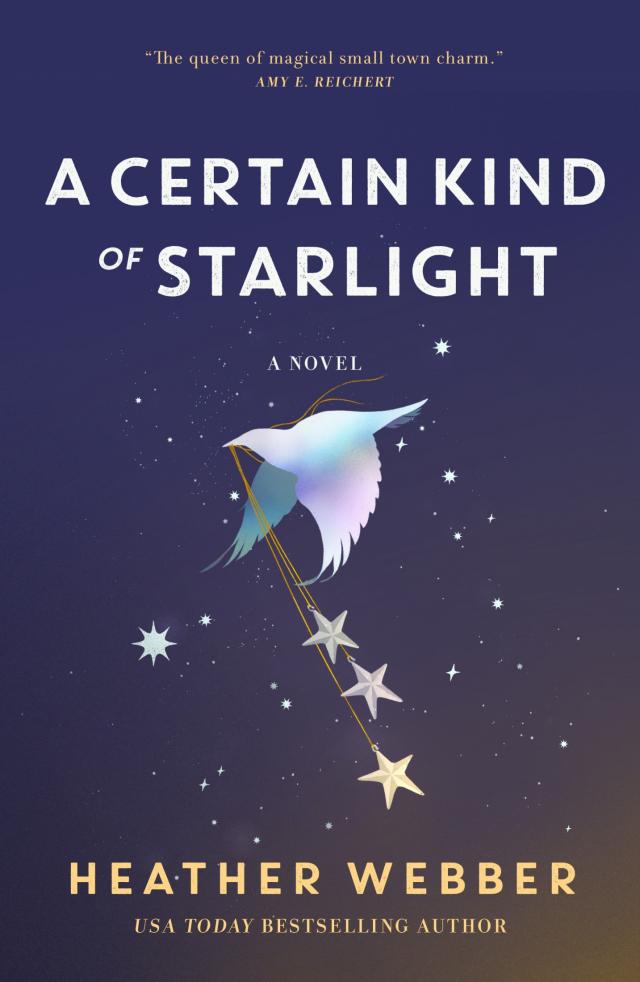
A certain kind of starli.., p.1
A Certain Kind of Starlight, page 1


Begin Reading
Table of Contents
About the Author
Copyright Page
Thank you for buying this
Tor Publishing Group ebook.
To receive special offers, bonus content,
and info on new releases and other great reads,
sign up for our newsletters.
Or visit us online at
us.macmillan.com/newslettersignup
For email updates on the author, click here.
The author and publisher have provided this e-book to you without Digital Rights Management software (DRM) applied so that you can enjoy reading it on your personal devices. This e-book is for your personal use only. You may not print or post this e-book, or make this e-book publicly available in any way. You may not copy, reproduce, or upload this e-book, other than to read it on one of your personal devices.
Copyright infringement is against the law. If you believe the copy of this e-book you are reading infringes on the author’s copyright, please notify the publisher at: us.macmillanusa.com/piracy.
This one is for my dad and his big, patched-up heart.
CHAPTER ONE
From the Kitchen of Verbena Fullbright
Sweet without salty is like hooting without hollering. They’re best together. Salt brightens flavors and lifts the texture of a cake, helping it stand tall and proud. Doesn’t everyone need a boost up every now and again?
Addie
Rooted deep within a woman’s complex DNA was the right to pick and choose the traditions and societal conventions she followed. This was especially true for matriarchs, the backbones, the older women who had seen it all, heard it all, dealt with it all, and no longer gave a flying fig what others thought. After years of living, of giving, of conforming, she now played by a set of rules carefully crafted from experience.
I personally believed southern women took this notion to a whole other level and kept that in mind as I studied my daddy’s older sister, Verbena Fullbright, fondly known by those closest to her as Bean.
Sitting primly, properly, on a stool pulled up to a stainless steel counter, Aunt Bean had her rounded shoulders drawn back, her head held high. Earlier today she’d been to see her lawyer, old Mr. Stubblefield, so she wore a long-sleeved leopard-print maxi dress and leather slingbacks instead of her usual baking attire. Her hairstyle was a cross between a pixie cut and a pompadour, the color of merlot. Her fingernails were painted black, a polish that would surely raise eyebrows around town if the people here didn’t know her and her funky style so well.
It was clear that even while feeling puny, Aunt Bean had stuck to her own particular notions of what was right and proper. She’d never attend a business meeting without wearing heels, even if her swollen feet had to be wedged into the shoes.
“Lordy mercy, those pearly gates are in for a mighty reckoning when I come calling. The heavens will be shaking,” Bean said theatrically, humor vibrating in her loud voice.
Her spirited statement was punctuated by two quick thumps of her wooden walking stick on the cement floor, the dramatic effect unfortunately mellowed by the stick’s thick rubber tip.
“Quaking, even,” Delilah Nash Peebles said as she removed a cake pan from an oven and slid it onto a multi-level stainless steel cooling rack that was taller than she was. She glanced at me, the crow’s feet at the corners of her eyes crinkling. “We all know Bean won’t be knocking politely. She’ll thunder on in and try to take over running the place.”
Mid-January sunshine poured in through the glass front door and tall windows of the converted big red barn on Aunt Bean’s vast property. It was the temporary home of the Starling Cake Company while the bakery’s Market Street location underwent a massive renovation.
I’d arrived a half hour ago and had been feeling a sense of déjà vu since—because this space had previously housed the bakery when it had been a home-based business. The air was once again scented with Aunt Bean’s homemade vanilla extract—along with a hint of chocolate and coffee from the mocha cakes currently baking—and everything looked the same as it used to when I was a little and practically glued to her apron strings. Three double ovens on one wall. Two stainless steel workstations. Four stand mixers. The decorating corner. An old range. Two massive refrigerators. A large bakery case.
And just like old times, I fell straight into helping where help was needed. Currently, I was dusting greased cake pans with cocoa powder while trying not to flat-out panic about my aunt’s health issues.
“Plus,” Bean sniffed loudly, indignantly, “I have a few grievances that need airing. Saint Peter’s going to get himself a right earful.”
Delilah added two more pans to the rack. “It’s no secret that you have a knack for speaking your mind. If I had a dollar for every time you’ve fussed about fondant, I’d be a rich woman. Poor Petal was fixin’ to pitch a hissy fit when you told her you wouldn’t use it for her wedding cake.”
“Petal Pottinger?” I asked. “She’s getting married?”
I felt a deep ache, one I had become familiar with since moving away from Starlight, from home, twelve years ago. It came from feeling like I was missing out. Mostly because I was.
“Sure enough. She’s getting hitched to Dare Fife next weekend in the ballroom at the Celestial Hotel,” Delilah said. “I’m convinced he’s the only good apple to fall from his crooked family tree. He’s almost twenty-two and hasn’t been thrown in jail yet, unlike the rest of the men in his family. Has himself a good job, too, at the flour mill.”
Dare Buckley Fife. My stomach rolled with worry for Petal, because around here, the Buckley name was synonymous with danger, with dishonor, with damage.
Bean shifted on the stool. “That Dare’s a good boy, so Petal might be all right at picking men, but God love her, she ain’t got the sense God gave a goose when it comes to cake. I call it fondon’t for a reason. And I’ll keep on saying it until my very last breath.”
“Can we not?” I asked, releasing a pent-up sigh. “We don’t need to be talking like you’re standing on death’s door, Aunt Bean.”
Because she wasn’t. She wasn’t.
“Now, Addie, it’s just talk,” she said. “But you know how I feel about dyin’. I’m not the least bit scared of it, though I hope it’ll hold off a good while. I’ve still got some livin’ to do.”
She might not be scared, but I sure was.
I’d known Bean hadn’t been feeling well for months now. After a bout with the flu last November, she’d started having trouble standing for long periods of time and walking distances without feeling out of breath and woozy—which was why she’d gotten the walking stick. I’d chalked up her slow healing simply to getting older. She was closing in on sixty-four, an age when most would be thinking about retiring. But not Aunt Bean.
Like generations of Fullbright women before her, she’d devoted her life to baking. To sharing with others, through cake, the ability to see the bright side of life and its possibilities.
When people tasted one of her confections, they were flooded with pleasant sparks of warmth and happiness as glimmers of hope and optimism, comfort and contentment filled emotional cracks created by life’s trials and stresses. Her cakes healed the soul and enhanced the inner light that helped guide people through hard times and enabled them to find silver linings in even the toughest situations.
For the bakery’s customers, the effects of the cakes lasted a good long while. Weeks. Sometimes months.
For the women in our family, the ability to see a bright side and all that came with it was a near constant in our lives, first appearing almost two hundred years ago after a star fell from the sky onto family land. Legend was that somehow the fallen star with its special glow had given us the gift, and we felt honor bound to use it to bring light and hope and brightness to others.
But beyond the glimmers, our bright sides also included the ability to see the good in a person, something that was revealed when we looked deeply into someone’s eyes. The glow of an inner light showed us the people who were kind, decent. And warned of those who were not.
Right now, though, as I sat in the barn kitchen, I was struggling to see any kind of light. There was no silver lining to be had.
When Bean had called this morning, telling me to get myself immediately back to Starlight for an emergency family meeting about her future plans, I’d felt an ominous chill that couldn’t possibly be related to retirement. A dark cloud descended.
Gloom followed me as I made the hour and forty-five–minute trip southeast from my apartment in Birmingham to the property that had been in our family for generations. The cloud had lifted only slightly when I’d found Aunt Bean waiting to welcome me with open arms.
Like always.
Immediately I’d noticed the physical changes in her. She’d puffed up a bit since I’d last seen her at Christmastime. Swelling. Edema. Then she told me she’d been to see a cardiologist in Montgomery earlier this week and he’d run a test that was worrisome.
I didn’t know how to process the information. Not the shock of it and certainly not the sprightly tone Bean and Delilah were using in talking about her possible death, of all things.
I lifted a cake pan, holding it carefully as I turned it this way and that, coating the surface in cocoa powder while I tried to think of something to say. Anything. But all the questions, all the love I had for my beloved aunt, were tangled up in a painful lump in my throat.
Currently, Del
The massive kitchen, which took up the whole ground floor of the barn, was quiet this afternoon, a rarity for a Friday. I was surprised the other two Sugarbirds—the collective nickname of the bakery’s employees, not including Aunt Bean—weren’t here working. Then I realized Aunt Bean had planned it that way. So she could have this talk with me without everyone butting in.
“I need your help, Addie.” Aunt Bean’s gaze leveled on me, light yet serious. “With my plans for the future, now that I’m dealing with this heart dropsy.”
Heart dropsy. Such a cutesy term for heart failure.
It’s what the preliminary test suggested. The doctor had prescribed medications, but a more aggressive treatment plan wouldn’t be decided until other tests were completed.
Delilah flashed me a sympathetic look as Aunt Bean said, “You know I’m a planner at heart.”
She always had been. She was a list maker, an organizer, a get-it-done and do-it-right kind of woman.
“In light of my current health issues,” she said, “I thought it best to do some advanced planning for the family businesses. Just in case.”
Just in case.
Wrapped tightly in sweet vanilla, the words whirled around as I pieced together what she truly meant: Just in case her prognosis was poor. Her heart incurable. Her condition terminal.
Pulling over a stool, I sat down before my knees gave way.
While there were two family businesses, the Starling Cake Company and Starlight Field, the bakery had always been my happy place growing up. Working alongside Aunt Bean and the Sugarbirds and my best friend Ree had been a joy. It was a place filled with love and happiness. A place to create and share. It was where I started to heal after my daddy’s death. Where possibilities seemed endless. Where hope was always in the air, along with the scent of vanilla.
One of the hardest things I’d ever done was walk away from it.
From this whole town, really.
“Though I’ve had plans in place for a long time now,” Bean said, “it’s been a minute since they’ve been updated. They weren’t nearly as detailed as I’d have liked them to be with itemization and whatnot.”
“Sure am glad I’m not George Stubblefield today.” Delilah let out a small laugh as she referred to our family’s lawyer, but I noticed mournfulness now glistened in her dark gaze, nearly hidden behind a pair of hot-pink cat-eye glasses.
I was relieved to see the sadness, consoled by the fact that I wasn’t the only one devastated by Bean’s health troubles. Delilah had just been putting on a brave face.
I suspected Aunt Bean was doing the same. There was no way, none at all, that she was taking this situation blithely. Aunt Bean was simply trying to find the light in this darkness, something that came as naturally to her as breathing.
But sometimes there was no bright side to life’s most painful moments.
I knew that better than most anyone.
“Hush now.” Aunt Bean waved her off. “There are still directives that need to be fine-tuned, but for now I’m satisfied with the progress.”
Plans. Directives. She was talking about her will.
“Oh lordy.” Delilah filled another cake pan. Her silvery-black hair sat atop her head in a braided crown, and there was a smudge of flour on her dark nose. “No doubt there are spreadsheets.”
Aunt Bean said, “Of course there are spreadsheets.”
She rested her hands atop the walking stick. On her wrist was a simple gold watch that had a tiny blue sapphire set into its face. It was a throwback to another time with its narrow shape and crown and needed winding every day. Some of the links were shinier than others—recent additions, I realized, most likely to accommodate the swelling.
Trying to distract myself, I grabbed another stack of pans to grease and flour. I knew from experience that tonight the baked cake layers would be crumb coated and refrigerated. Tomorrow morning, they would then be fully frosted and decorated. The take-out window would open at ten A.M. and because the cakes were sold first come, first served, without a doubt, by nine thirty there would be a line of cars flowing down the driveway and along the county road, hazard lights flashing as people patiently waited to for a taste of magic to heal their souls.
Aunt Bean went on, saying, “I’m not worried about the fate of the bakery. It’s the field that concerns me.”
At the mention of the field I vehemently shook my head and reached for the star-shaped sapphire pendant that hung from a long chain around my neck. It had been a gift from Aunt Bean when I was little, and holding it had always brought a small measure of comfort—something I needed desperately right now.
“All right, punkin. We won’t talk about it right now, but it has to be discussed soon.” Her voice was steady, strong. “We must plan ahead to ensure that Winchester Wingrove does not gain possession of the starlight field.”
The field was the site where a star had fallen in 1833 during a massive meteor shower, creating a shallow crater, a star wound. On days when the sun shone brightly, come nighttime in that grassy, bowl-shaped field, glowed a certain kind of starlight. It rose from the ground, a shimmery curtain of blue and yellow and silver and green that danced across the earth like aurora. In that magical light, those in need of guidance received the gift of clarity.
“Winchester, the greedy, self-serving money-grubber, will do everything in his power to get his hands on the field.” Bean’s walking stick once again banged the floor, two quick bursts, the sound still disappointingly muffled in comparison with her vehemence. “Particularly since Constance Jane has passed on, God bless her soul. She was the only thing keeping him in line for so long.”
Winchester’s wife, Constance Jane Cobb Wingrove, had been able to keep him in line because, as one of the heirs to the Cobb Steel fortune, she controlled the family purse strings. Strings he had very much been attached to. Everyone knew he’d only married her for her money. When she’d passed away two years ago, she’d left Winchester a very wealthy—and untethered—man.
“If he excavates the starlight crater, all its light will disappear.” Aunt Bean shook her head as if she could not conceive of that level of stupidity. “I—we—cannot let that happen.”
Winchester, who came from a long line of notorious conmen, cardsharps, counterfeiters, pickpockets, gamblers, and thieves, had become captivated with the starlight field as a young man who’d been in and out of trouble with the law. That was when he discovered an old family journal containing a recounting of the night the star fell, one that spun a fanciful story of how the star had shattered into diamonds when it hit the ground.
That same journal also revealed a long-forgotten fact: the starlight field had once belonged to his family. The knowledge ignited within him a powerful jealousy, lighting a fire that still burned to this day. He made no secret of wanting the land back, of wanting to explore the diamond legend, and vowed that he wouldn’t rest until the field was his.
He’d been a thorn in the side of the Fullbright family for decades.
Bean rubbed the face of her watch, her gaze steady on me. “The issue at hand, as you might have surmised, is Tessa Jane.”
I dug my nails into my palms. Tessa Jane was Winchester’s only granddaughter—and also, thanks to an extramarital relationship the family didn’t like to talk about, Aunt Bean’s niece. For a while, Tessa Jane and her mother, Henrietta, had lived with Constance Jane and Winchester here in Starlight. But when Tessa Jane was eleven, her mama, for reasons unknown, had packed up their Cadillac and moved them six hours away to Savannah, Georgia.
It was a move that had confused many around here, considering how close Henrietta was with her mama.
But for me, I’d felt nothing but relief that they were gone.
Aunt Bean was worried now because half the starlight field belonged to Tessa Jane. It was currently being held in trust but would be released at the end of February, on her twenty-fifth birthday.
“I hardly imagine Tessa Jane would disregard your recommendations, Aunt Bean,” I said carefully, trying to keep my own feelings for Tessa Jane out of my voice. “She adores you. And she loves the field.”