Charlie to the Rescue

Charlie to the Rescue

R. M. Ballantyne

Fiction / Children's / Travel

This work has been selected by scholars as being culturally important and is part of the knowledge base of civilization as we know it.This work is in the public domain in the United States of America, and possibly other nations. Within the United States, you may freely copy and distribute this work, as no entity (individual or corporate) has a copyright on the body of the work.Scholars believe, and we concur, that this work is important enough to be preserved, reproduced, and made generally available to the public. To ensure a quality reading experience, this work has been proofread and republished using a format that seamlessly blends the original graphical elements with text in an easy-to-read typeface.We appreciate your support of the preservation process, and thank you for being an important part of keeping this knowledge alive and relevant. --This text refers to an alternate Paperback edition. --This text refers to an alternate Paperback edition.
Read online
  • 359
Fighting the Whales

Fighting the Whales

R. M. Ballantyne

Fiction / Children's / Travel

Illustrated with 10 unique illustrations.Away in the WildernessThe Battery and the BoilerThe Battle and the BreezeBattles with the SeaThe Big OtterBlack IvoryBlown to BitsBlue LightsThe Buffalo RunnersThe Cannibal IslandsCharlie to the RescueChasing the SunThe Coral IslandThe Coxswain\'s BrideThe Crew of the Water WagtailDeep Down, a Tale of the Cornish MinesDigging for GoldThe Dog Crusoe and his MasterDusty Diamonds Cut and PolishedThe Eagle CliffErling the BoldFast in the IceFighting the FlamesFighting the WhalesThe Floating Light of the Goodwin SandsFort DesolationFreaks on the FellsThe FugitivesThe Garret and the GardenGascoyne, the Sandal-Wood TraderThe Giant of the NorthThe Golden DreamThe Gorilla HuntersHandbook to the new Gold-fieldsThe Hot SwampHudson BayHunted and HarriedHunting the LionsThe Island QueenThe LifeboatLife in the Red BrigadeThe LighthouseThe Lonely IslandThe Madman and the PirateMartin RattlerThe Norsemen in the WestOver the Rocky MountainsPhilosopher JackThe PioneersThe Pirate CityThe Red Man\'s RevengeRivers of IceSunk at SeaThe Young Fur Traders
Read online
  • 340
A Girl in Ten Thousand

A Girl in Ten Thousand

L. T. Meade

Children's Books / Mystery / Fiction

"You are the comfort of my life, Effie. If you make up your mind to go away, what is to become of me?" The speaker was a middle-aged woman. She was lying on a sofa in a shabby little parlor. The sofa was covered with horse-hair, the room had a faded paper, and faded chintz covered the shabby furniture. The woman\'s pleading words were emphasized by her tired eyes and worn face. She looked full at the young girl to whom she spoke. "What shall I do without you, and what will your father say?" "I have made up my mind," said Effie. "I don\'t want to be unkind to you, mother,—I love you more than words can say,—but I must go out into the world. I must live my life like other girls." "You had none of these ideas until you met Dorothy Fraser." "Yes, I have had them for a long time; Dorothy has given them emphasis, that\'s all. Dorothy\'s mother did not like her to go away, but now she is glad. She says that nothing has made Dorothy into so fine a woman as taking her life into her own hands, and making the best she can of it. Before I go, mother, I will get Agnes to learn all my duties; she shall help you. She is nearly fourteen; she ought to be of use to you, ought she not?" "She would not be like you," replied Mrs. Staunton. "She is very young, remember, and is at school most of the day. I won\'t argue with you, Effie, but it tires me even to think of it." Effie sighed. She bent down and kissed her mother. Her words had sounded hard and almost defiant, but there was nothing at all hard or defiant about her sweet face. She was a dark-eyed girl, and looked as if she might be any age between seventeen and twenty. There was a likeness between her and her mother quite sufficient to show their relationship; both faces were softly curved, both pairs of eyes were dark, and the mother must have been even prettier in her youth than the daughter was now. "As I say," continued Mrs. Staunton, "it fills me with terror to think of doing without you." "Try not to think of it, mother. I am not going yet, I only want to go very much indeed. I am going to talk to father about it. I want to have the thing arranged while Dorothy is here." Here Effie went suddenly on her knees by the sofa and threw one young arm protectingly round her mother. "You do not know what it means to me," she said. "When Dorothy talks of the full life, the keen interest, the battle, the thrill of living, I feel that I must go into it—I must." While Effie was speaking, Mrs. Staunton looked fixedly at her. There are moments which all mothers know, when they put themselves completely out of sight, when they blot themselves out, as it were. This time had come to Mrs. Staunton now. After a pause, she said, and her words came out even without a sigh: "The question, after all, is this, Effie: What will your father say?" "When he thinks it out carefully he will be pleased," replied Effie. "He must be interested in the profession I want to take up. How often—oh, how often, mother—has he groaned and sighed at the bad nursing which his patients get! You know you have always said, and he has said the same, that I am a born nurse. Won\'t he be proud and pleased when I come home and tell him all about the new ways in which things are done in London hospitals? You know there are six of us, and Agnes and Katie are growing up, and can take my place at home presently. Of course I know that father is quite the cleverest doctor in Whittington, but nobody gets ill here, and it is quite impossible to go on clothing and feeding six of us with no means at all. I do not think I am vain, mother, and I do not really care very much about dress, but mine is shabby, is it not? I think I should look pretty—as pretty as you must have looked long ago—if I were better dressed." "No dress can change your face," said Mrs. Staunton, with sudden passion. "You have the sweetest and dearest face in the world to me."
Read online
  • 395
Black Ivory

Black Ivory

R. M. Ballantyne

Fiction / Children's / Travel

R.M. Ballantyne, in full Robert Michael Ballantyne (born April 24, 1825, Edinburgh, Scot.—died Feb. 8, 1894, Rome, Italy), Scottish author chiefly famous for his adventure story The Coral Island (1858). This and all of Ballantyne’s stories were written from personal experience. The heroes of his books are models of self-reliance and moral uprightness. Snowflakes and Sunbeams; or, The Young Fur Traders (1856) is a boys’ adventure story based on Ballantyne’s experiences with the Hudson’s Bay Company. Annoyed by a geography-related mistake he had made in The Coral Island, he afterward traveled widely to research the backgrounds of his stories.
Read online
  • 339
Tom Swift and His Sky Racer; Or, The Quickest Flight on Record

Tom Swift and His Sky Racer; Or, The Quickest Flight on Record

Victor Appleton

Science Fiction / Fiction / Childrens

Chapter One The Prize Offer "Is this Tom Swift, the inventor of several airships?" The man who had rung the bell glanced at the youth who answered his summons. "Yes, I\'m Tom Swift," was the reply. "Did you wish to see me?" "I do. I\'m Mr. James Gunmore, secretary of the Eagle Park Aviation Association. I had some correspondence with you about a prize contest we are going to hold. I believe—" "Oh, yes, I remember now," and the young inventor smiled pleasantly as he opened wider the door of his home. "Won\'t you come in? My father will be glad to see you. He is as much interested in airships as I am." And Tom led the way to the library, where the secretary of the aviation society was soon seated in a big, comfortable leather chair. "I thought we could do better, and perhaps come to some decision more quickly, if I came to see you, than if we corresponded," went on Mr. Gunmore. "I hope I haven\'t disturbed you at any of your inventions," and the secretary smiled at the youth. "No. I\'m through for to-day," replied Tom. "I\'m glad to see you. I thought at first it was my chum, Ned Newton. He generally runs over in the evening." "Our society, as I wrote you, Mr. Swift, is planning to hold a very large and important aviation meet at Eagle Park, which is a suburb of Westville, New York State. We expect to have all the prominent \'bird-men\' there, to compete for prizes, and your name was mentioned. I wrote to you, as you doubtless recall, asking if you did not care to enter." "And I think I wrote you that my big aeroplane-dirigible, the Red Cloud, was destroyed in Alaska, during a recent trip we made to the caves of ice there, after gold," replied Tom. "Yes, you did," admitted Mr. Gunmore, "and while our committee was very sorry to hear that, we hoped you might have some other air craft that you could enter at our meet. We want to make it as complete as possible, and we all feel that it would not be so unless we had a Swift aeroplane there." "It\'s very kind of you to say so," remarked Tom, "but since my big craft was destroyed I really have nothing I could enter." "Haven\'t you an aeroplane of any kind? I made this trip especially to get you to enter. Haven\'t you anything in which you could compete for the prizes? There are several to be offered, some for distance flights, some for altitude, and the largest, ten thousand dollars, for the speediest craft. Ten thousand dollars is the grand prize, to be awarded for the quickest flight on record." "I surely would like to try for that," said Tim, "but the only craft I have is a small monoplane, the Butterfly, I call it, and while it is very speedy, there have been such advances made in aeroplane construction since I made mine that I fear I would be distanced if I raced in her. And I wouldn\'t like that." "No," agreed Mr. Gunmore. "I suppose not. Still, I do wish we could induce you to enter. I don\'t mind telling you that we consider you a drawing-card. Can\'t we induce you, some way?" "I\'m afraid not. I haven\'t any machine which—" "Look here!" exclaimed the secretary eagerly....
Read online
  • 356
Tom Swift and His Great Searchlight; or, on the border for Uncle Sam

Tom Swift and His Great Searchlight; or, on the border for Uncle Sam

Victor Appleton

Science Fiction / Fiction / Childrens

American boys\' fiction under pseudonym used by the Stratemeyer Syndicate who produced Tom Swift series, Nancy Drew mysteries, the Hardy Boys, Dave Fearless and many others. Tom Swift and His Great Searchlight is a really good old classic young readers book about a young inventor that invents this awesome inventions and then goes on these wild and crazy adventures, sometimes getting into trouble in the process.
Read online
  • 344
The White Conquerors: A Tale of Toltec and Aztec

The White Conquerors: A Tale of Toltec and Aztec

Kirk Munroe

Fiction / Childrens

Kirk Munroe (September 15, 1850 – June 16, 1930) was an American writer and conservationistBorn Charles Kirk Munroe in a log cab near Prairie du Chien, Wisconsin, Munroe was the son of Charles and Susan (Hall) Munroe. His youth was spent on the frontier, after which his family moved to Cambridge, Massachusetts where he attended school until he was sixteen. He publicly dropped "Charles" from his name in 1883. In 1876, Kirk Munroe was hired as a reporter for the New York Sun. Three years later he became the first editor of Harper\'s Young People magazine; he resigned in 1881. From 1879 to 1884, he was the commodore of New York Canoe club. During this time he helped found the League of American Wheelmen with Charles E. Pratt on May 31, 1880. Munroe was the Wheelmen\'s first Commander. He married Mary Barr, daughter of Amelia E. Barr on September 15, 1883. The couple settled in Coconut Grove, Miami, Florida in 1886.[4] Mary accompanied him on several cruises on the Allapata, a thirty-five foot sharpie-ketch sailboat designed by Ralph Middleton Munroe. While in Florida, Munroe became a noted member of the Florida Audubon Society, and recommended a family friend Guy Bradley to the position as game warden in southern Florida. Bradley was later killed by plume hunters while on duty in the Everglades. Munroe builds a tennis court on his property. It is the first tennis court in Miami-Dade county. Munroe helped in establishing what is today called Ransom Everglades School. After Mary died in September 1922, he married his second wife, Mabel Stearns, in 1924. Kirk Munroe died June 16, 1930 at the age of 79. He was buried next to his first wife, Mary at the Woodlawn Park Cemetery in Miami.
Read online
  • 334
The Adventures of A Brownie

The Adventures of A Brownie

Dinah Maria Mulock Craik

Fiction

THERE was once a little Brownie, who lived—where do you think he lived? in a coal-cellar. Now a coal-cellar may seem a most curious place to choose to live in; but then a Brownie is a curious creature—a fairy, and yet not one of that sort of fairies who fly about on gossamer wings, and dance in the moonlight, and so on. He never dances; and as to wings, what use would they be to him in a coal-cellar? He is a sober, stay-at-home, household elf—nothing much to look at, even if you did see him, which you are not likely to do—only a little old man, about a foot high, all dressed in brown, with a brown face and hands, and a brown peaked cap, just the color of a brown mouse. And, like a mouse, he hides in corners—especially kitchen corners, and only comes out after dark when nobody is about, and so sometimes people call him Mr. Nobody.
Read online
  • 378
The Peterkin Papers

The Peterkin Papers

Lucretia P. Hale

Fiction / Childrens / Classics

Excerpt: ...Osborne, in despair; "they\'ll never guess \'P\'!" The next scene was gorgeous. Solomon John, as a Turk, reclined on John Osborne\'s army-blanket. He had on a turban, and a long beard, and all the family shawls. Ann Maria and Elizabeth Eliza were brought in to him, veiled, by the little boys in their Hindoo costumes. This was considered the great scene of the evening, though Elizabeth Eliza was sure she did not know what to do,
Read online
  • 349
The Lighthouse

The Lighthouse

R. M. Ballantyne

Fiction / Children's / Travel

CHAPTER I THE ROCK Early on a summer morning, about the beginning of the nineteenth century, two fishermen of Forfarshire wended their way to the shore, launched their boat, and put off to sea. One of the men was tall and ill-favoured, the other, short and well-favoured. Both were square-built, powerful fellows, like most men of the class to which they belonged. It was about that calm hour of the morning which precedes sunrise, when most living creatures are still asleep, and inanimate nature wears, more than at other times, the semblance of repose. The sea was like a sheet of undulating glass. A breeze had been expected, but, in defiance of expectation, it had not come, so the boatmen were obliged to use their oars. They used them well, however, insomuch that the land ere long appeared like a blue line on the horizon, then became tremulous and indistinct, and finally vanished in the mists of morning. The men pulled "with a will,"—as seamen pithily express in silence. Only once during the first hour did the ill-favoured man venture a remark. Referring to the absence of wind, he said, that "it would be a\' the better for landin\' on the rock." This was said in the broadest vernacular dialect, as, indeed, was everything that dropped from the fishermen\'s lips. We take the liberty of modifying it a little, believing that strict fidelity here would entail inevitable loss of sense to many of our readers. The remark, such as it was, called forth a rejoinder from the short comrade, who stated his belief that "they would be likely to find somethin\' there that day." They then relapsed into silence. Under the regular stroke of the oars the boat advanced steadily, straight out to sea. At first the mirror over which they skimmed was grey, and the foam at the cutwater leaden-coloured. By degrees they rowed, as it were, into a brighter region. The sea ahead lightened up, became pale yellow, then warmed into saffron, and, when the sun rose, blazed into liquid gold. The words spoken by the boatmen, though few, were significant. The "rock" alluded to was the celebrated and much dreaded Inch Cape—more familiarly known as the Bell Rock—which being at that time unmarked by lighthouse or beacon of any kind, was the terror of mariners who were making for the firths of Forth and Tay. The "something" that was expected to be found there may be guessed at, when we say that one of the fiercest storms that ever swept our eastern shores had just exhausted itself after strewing the coast with wrecks. The breast of ocean, though calm on the surface, as has been said, was still heaving with a mighty swell, from the effects of the recent elemental conflict. "D\'ye see the breakers noo, Davy?" enquired the ill-favoured man, who pulled the aft oar. "Ay, and hear them, too," said Davy Spink, ceasing to row, and looking over his shoulder towards the seaward horizon. "Yer een and lugs are better than mine, then," returned the ill-favoured comrade, who answered, when among his friends, to the name of Big Swankie, otherwise, and more correctly, Jock Swankie....
Read online
  • 291
The Eagle Cliff

The Eagle Cliff

R. M. Ballantyne

Fiction / Children's / Travel

Begins the Tale—Naturally. From the earliest records of history we learn that man has ever been envious of the birds, and of all other winged creatures. He has longed and striven to fly. He has also signally failed to do so. We say “failed” advisedly, because his various attempts in that direction have usually resulted in disappointment and broken bones. As to balloons, we do not admit that they fly any more than do ships; balloons merely float and glide, when not otherwise engaged in tumbling, collapsing, and bursting. This being so, we draw attention to the fact that the nearest approach we have yet made to the sensation of flying is that achieved by rushing down a long, smooth, steep hill-road on a well-oiled and perfect ball-bearings bicycle! Skating cannot compare with this, for that requires exertion; bicycling down hill requires none. Hunting cannot, no matter how splendid the mount, for that implies a certain element of bumping, which, however pleasant in itself, is not suggestive of the smooth swift act of flying. We introduce this subject merely because thoughts somewhat similar to those which we have so inadequately expressed were burning in the brain of a handsome and joyful young man one summer morning not long ago, as, with legs over the handles, he flashed—if he did not actually fly—down one of our Middlesex hills on his way to London. Urgent haste was in every look and motion of that young man’s fine eyes and lithe body. He would have bought wings at any price had that been possible; but, none being yet in the market, he made the most of his wheel—a fifty-eight inch one, by the way, for the young man’s legs were long, as well as strong. Arrived at the bottom of the hill the hilarious youth put his feet to the treadles, and drove the machine vigorously up the opposite slope. It was steep, but he was powerful. He breathed hard, no doubt, but he never flagged until he gained the next summit. A shout burst from his lips as he rolled along the level top, for there, about ten miles off, lay the great city, glittering in the sunshine, and with only an amber-tinted canopy of its usual smoke above it. Among the tall elms and in the flowering hedgerows between which he swept, innumerable birds warbled or twittered their astonishment that he could fly with such heedless rapidity through that beautiful country, and make for the dismal town in such magnificent weather. One aspiring lark overhead seemed to repeat, with persistent intensity, its trill of self gratulation that it had not been born a man. Even the cattle appeared to regard the youth as a sort of ornithological curiosity, for the sentiment, “Well, you are a goose!” was clearly written on their mild faces as he flew past them. Over the hill-top he went—twelve miles an hour at the least—until he reached the slope on the other side; then down he rushed again, driving at the first part of the descent like an insane steam-engine, till the pace must have increased to twenty miles, at which point, the whirl of the wheel becoming too rapid, he was obliged once more to rest his legs on the handles, and take to repose, contemplation, and wiping his heated brow—equivalent this, we might say, to the floating descent of the sea-mew....
Read online
  • 349
The Fugitives: The Tyrant Queen of Madagascar

The Fugitives: The Tyrant Queen of Madagascar

R. M. Ballantyne

Fiction / Children's / Travel

The Fugitives - The Tyrant Queen of Madagascar is presented here in a high quality paperback edition. This popular classic work by R. M. (Robert Michael) Ballantyne is in the English language, and may not include graphics or images from the original edition. If you enjoy the works of R. M. (Robert Michael) Ballantyne then we highly recommend this publication for your book collection.
Read online
  • 369
Nellies Housekeeping

Nellie's Housekeeping

Joanna H. Mathews

Fiction / Childrens / Classics

This scarce antiquarian book is a facsimile reprint of the original. Due to its age, it may contain imperfections such as marks, notations, marginalia and flawed pages. Because we believe this work is culturally important, we have made it available as part of our commitment for protecting, preserving, and promoting the world\'s literature in affordable, high quality, modern editions that are true to the original work.
Read online
  • 351
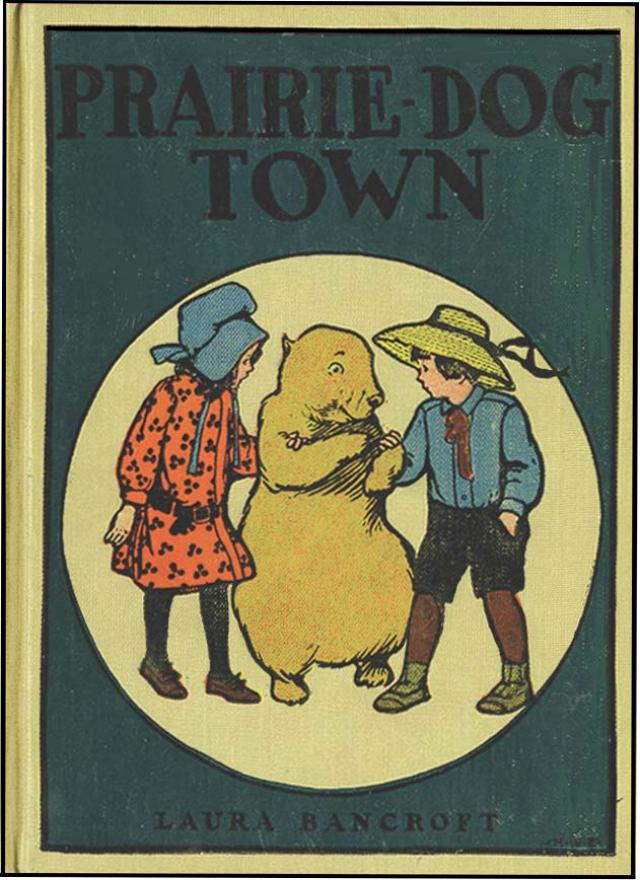
Prairie-Dog Town

Prairie-Dog Town

L. Frank Baum

Children's Books / Fantasy / Fiction

Leopold Classic Library is delighted to publish this classic book as part of our extensive collection. As part of our on-going commitment to delivering value to the reader, we have also provided you with a link to a website, where you may download a digital version of this work for free. Many of the books in our collection have been out of print for decades, and therefore have not been accessible to the general public. Whilst the books in this collection have not been hand curated, an aim of our publishing program is to facilitate rapid access to this vast reservoir of literature. As a result of this book being first published many decades ago, it may have occasional imperfections. These imperfections may include poor picture quality, blurred or missing text. While some of these imperfections may have appeared in the original work, others may have resulted from the scanning process that has been applied. However, our view is that this is a significant literary work, which deserves to be brought back into print after many decades. While some publishers have applied optical character recognition (OCR), this approach has its own drawbacks, which include formatting errors, misspelt words, or the presence of inappropriate characters. Our philosophy has been guided by a desire to provide the reader with an experience that is as close as possible to ownership of the original work. We hope that you will enjoy this wonderful classic book, and that the occasional imperfection that it might contain will not detract from the experience.
Read online
  • 450
The Young Railroaders

The Young Railroaders

Francis Lovell Coombs

Young Adult / Historical / Fiction

ONE KIND OF WIRELESS When, after school that afternoon, Alex Ward waved a good-by to his father, the Bixton station agent for the Middle Western, and set off up the track on the spring’s first fishing, he had little thought of exciting experiences ahead of him. Likewise, when two hours later a sudden heavy shower found him in the woods three miles from home, and with but three small fish, it was only with feelings of disappointment that he wound up his line and ran for the shelter of an old log-cabin a hundred yards back from the stream. Scarcely had Alex reached the doorway of the deserted house when he was startled by a chorus of excited voices from the rear. He turned quickly to a window, and with a cry sprang back out of sight. Emerging from the woods, excitedly talking and gesticulating, was a party of foreigners who had been working on the track near Bixton, and in their midst, his hands bound behind him, was Hennessy, their foreman. For a moment Alex stood rooted to the spot. What did it mean? Suddenly realizing his own possible danger, he caught up his rod and fish, and sprang for the door. On the threshold he sharply halted. In the open he would be seen at once, and pursued! He turned and cast a quick glance round the room. The ladder to the loft! He darted for it, scrambled up, and drew himself through the opening just as the excited foreigners poured in through the door below. For some moments afraid to move, Alex lay on his back, listening to the hubbub beneath him, and wondering in terror what the trackmen intended doing with their prisoner. Then, gathering courage at their continued ignorance of his presence, he cautiously moved back to the opening and peered down. The men were gathered in the center of the room, all talking at once. But he could not see the foreman. As he leaned farther forward heavy footfalls sounded about the end of the house, and Big Tony, a huge Italian who had recently been discharged from the gang, appeared in the doorway. “We puta him in da barn,” he announced in broken English; for the rest of the gang were Poles. “Tomaso, he watcha him.” “An’ now listen,” continued the big trackman fiercely, as the rest gathered about him. “I didn’t tell everyt’ing. Besides disa man Hennessy he say cuta da wage, an’ send for odders take your job, he tella da biga boss you no worka good, so da biga boss he no pay you for all da last mont’!” The ignorantly credulous Poles uttered a shout of rage. Several cried: “Keel him! Keel him!” Alex, in the loft, drew back in terror. “No! Dere bettera way dan dat,” said Tony. “Da men to taka your job come to-night on da Nomber Twent’. I hava da plan. “You alla know da old track dat turn off alonga da riv’ to da old brick-yard? Well, hunerd yard from da main line da old track she washed away. We will turn da old switch, Nomber Twent’ she run on da old track—an’ swoosh! Into da riv’!” Run No. 20 into the river! Alex almost cried aloud. And he knew the plan would succeed—that, as Big Tony said, a hundred yards from the main-line track the old brick-yard siding embankment was washed out so that the rails almost hung in the air....
Read online
  • 340
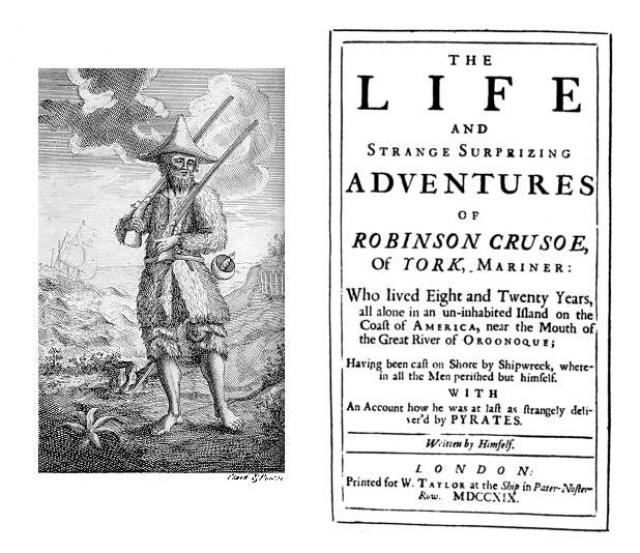
An American Robinson Crusoe

An American Robinson Crusoe

Daniel Defoe

Fiction / Politics / Nonfiction

The Life and Strange Surprising Adventures of Robinson Crusoe (of York, Mariner Who lived Eight and Twenty Years all alone in an un-inhabited Island on the Coast of America, near the Mouth of the Great River of Oroonoque; Having been cast on Shore by Shipwreck, where in all the Men perished but Himself. With An Account how he was at last as strangely deliver\'d by Pyrates) is a novel by Daniel Defoe, first published in 1719 and sometimes regarded as the first novel in English. The book is a fictional autobiography of the title character, an English castaway who spends 28 years on a remote tropical island near Venezuela, encountering Native Americans, captives, and mutineers before being rescued. This device, presenting an account of supposedly factual events, is known as a "false document" and gives a realistic frame story. Daniel Defoe was an English writer, journalist and spy, who gained enduring fame for his novel Robinson Crusoe. Defoe is notable for being one of the earliest practitioners of the novel and helped popularize the genre in Britain. In some texts he is even referred to as one of the founders, if not the founder, of the English novel. A prolific and versatile writer, he wrote over five hundred books, pamphlets, and journals on various topics (including politics, crime, religion, marriage, psychology and the supernatural). He was also a pioneer of economic journalism. Source: Wikipedia
Read online
  • 348
The Carter Girls Mysterious Neighbors

The Carter Girls' Mysterious Neighbors

Nell Speed

Fiction / Childrens

The Carters were en route to their winter quarters, chosen after much discussion and misgivings as the best place they could find for all concerned. The doctor had pronounced the ultimatum: Mr. Carter must be in the country for another year at least and he must have no business worries. He must live out-of-doors as much as possible and no matter how perplexing the problems that in the natural course of events would arise in a household, they were not to be brought to the master of that household. As Mrs. Carter had determined many weeks before to play the rôle of a lily of the field, announcing herself as a semi-invalid, who was to be loved and cherished and waited on but not to be worried, it meant that Douglas, as oldest child, must be mother and father as well. Hers was the thankless task of telling her sisters what they must and must not do, and curbing the extravagance that would break out now and then in spots. Small wonder that it was the case, as, up to a few months before this, lavish expenditure had been the rule in the Carter family rather than the exception.
Read online
  • 337
The Giant of the North: Pokings Round the Pole

The Giant of the North: Pokings Round the Pole

R. M. Ballantyne

Fiction / Children's / Travel

Introduces our Hero and his Kindred. The Giant was an Eskimo of the Arctic regions. At the beginning of his career he was known among his kindred by the name of Skreekinbroot, or the howler, because he howled oftener and more furiously than any infant that had ever been born in Arctic land. His proper name, however, was Chingatok, though his familiars still ventured occasionally to style him Skreekinbroot. Now it must not be supposed that our giant was one of those ridiculous myths of the nursery, with monstrous heads and savage hearts, who live on human flesh, and finally receive their deserts at the hands of famous giant-killing Jacks. No! Chingatok was a real man of moderate size—not more than seven feet two in his sealskin boots—with a lithe, handsome figure, immense chest and shoulders, a gentle disposition, and a fine, though flattish countenance, which was sometimes grave with thought, at other times rippling with fun. We mention the howling characteristic of his babyhood because it was, in early life, the only indication of the grand spirit that dwelt within him—the solitary evidence of the tremendous energy with which he was endowed. At first he was no bigger than an ordinary infant. He was, perhaps, a little fatter, but not larger, and there was not an oily man or woman of the tribe to which he belonged who would have noticed anything peculiar about him if he had only kept moderately quiet; but this he would not or could not do. His mouth was his safety-valve. His spirit seemed to have been born big at once. It was far too large for his infant body, and could only find relief from the little plump dwelling in which it was at first enshrined by rushing out at the mouth. The shrieks of pigs were trifles to the yelling of that Eskimo child’s impatience. The caterwauling of cats was as nothing to the growls of his disgust. The angry voice of the Polar bear was a mere chirp compared with the furious howling of his disappointment, and the barking of a mad walrus was music to the roaring of his wrath. Every one, except his mother, wished him dead and buried in the centre of an iceberg or at the bottom of the Polar Sea. His mother—squat, solid, pleasant-faced, and mild—alone put up with his ways with that long-suffering endurance which is characteristic of mothers. Nothing could disturb the serenity of Toolooha. When the young giant, (that was to be), roared, she fondled him; if that was ineffectual, she gave him a walrus tusk or a seal’s flipper to play with; if that did not suffice, she handed him a lump of blubber to suck; if that failed, as was sometimes the case, she gambolled with him on the floor of her snow-hut, and rubbed his oily visage lovingly over her not less oleaginous countenance. Need we enlarge on this point? Have not all mothers acted thus, or similarly, in all times and climes? From pole to pole a mother’s soulIs tender, strong, and true;Whether the loved be good or bad—White, yellow, black, or blue. But Toolooha’s love was wise as well as strong....
Read online
  • 290
The Dog Crusoe and his Master

The Dog Crusoe and his Master

R. M. Ballantyne

Fiction / Children's / Travel

The Backwoods Settlement—Crusoe’s Parentage and Early History—The agonising pains and sorrows of his puppyhood, and other interesting matters. The dog Crusoe was once a pup. Now do not, courteous reader, toss your head contemptuously, and exclaim, “Of course he was; I could have told you that.” You know very well that you have often seen a man above six feet high, broad and powerful as a lion, with a bronzed shaggy visage and the stern glance of an eagle, of whom you have said, or thought, or heard others say, “It is scarcely possible to believe that such a man was once a squalling baby.” If you had seen our hero in all the strength and majesty of full-grown doghood, you would have experienced a vague sort of surprise had we told you—as we now repeat—that the dog Crusoe was once a pup—a soft, round, sprawling, squeaking pup, as fat as a tallow candle, and as blind as a bat. But we draw particular attention to the fact of Crusoe’s having once been a pup, because in connection with the days of his puppyhood there hangs a tale. This peculiar dog may thus be said to have had two tails—one in connection with his body, the other with his career. This tale, though short, is very harrowing, and, as it is intimately connected with Crusoe’s subsequent history, we will relate it here. But before doing so we must beg our reader to accompany us beyond the civilised portions of the United States of America—beyond the frontier settlements of the “far west,” into those wild prairies which are watered by the great Missouri river—the Father of Waters—and his numerous tributaries. Here dwell the Pawnees, the Sioux, the Delawares, the Crows, the Blackfeet, and many other tribes of Red Indians, who are gradually retreating step by step towards the Rocky Mountains as the advancing white man cuts down their trees and ploughs up their prairies. Here, too, dwell the wild horse and the wild ass, the deer, the buffalo, and the badger; all, men and brutes alike, wild as the power of untamed and ungovernable passion can make them, and free as the wind that sweeps over their mighty plains. There is a romantic and exquisitely beautiful spot on the banks of one of the tributaries above referred to—a long stretch of mingled woodland and meadow, with a magnificent lake lying like a gem in its green bosom—which goes by the name of the Mustang Valley. This remote vale, even at the present day, is but thinly peopled by white men, and is still a frontier settlement round which the wolf and the bear prowl curiously, and from which the startled deer bounds terrified away. At the period of which we write the valley had just been taken possession of by several families of squatters, who, tired of the turmoil and the squabbles of the then frontier settlements, had pushed boldly into the far west to seek a new home for themselves, where they could have “elbow room,” regardless alike of the dangers they might encounter in unknown lands and of the Red-skins who dwelt there. The squatters were well armed with axes, rifles, and ammunition. Most of the women were used to dangers and alarms, and placed implicit reliance in the power of their fathers, husbands, and brothers to protect them—and well they might, for a bolder set of stalwart men than these backwoodsmen never trod the wilderness....
Read online
  • 297
Dusty Diamonds Cut and Polished: A Tale of City Arab Life and Adventure

Dusty Diamonds Cut and Polished: A Tale of City Arab Life and Adventure

R. M. Ballantyne

Fiction / Children's / Travel

Dusty Diamonds Cut and Polished - A Tale of City Arab Life and Adventure is presented here in a high quality paperback edition. This popular classic work by R. M. (Robert Michael) Ballantyne is in the English language, and may not include graphics or images from the original edition. If you enjoy the works of R. M. (Robert Michael) Ballantyne then we highly recommend this publication for your book collection.
Read online
  • 300
A Sweet Little Maid

A Sweet Little Maid

Amy Ella Blanchard

Classics / Childrens / Fiction

Publisher: Hurst Publication date: 1899 Subjects: Readers Children\'s stories Computers / Programming Languages / General Fiction / General Juvenile Fiction / General Juvenile Fiction / Family / General Juvenile Fiction / Family / Parents Notes: This is an OCR reprint. There may be typos or missing text. There are no illustrations or indexes. When you buy the General Books edition of this book you get free trial access to Million-Books.com where you can select from more than a million books for free. You can also preview the book there.
Read online
  • 365
The Norsemen in the West

The Norsemen in the West

R. M. Ballantyne

Fiction / Children's / Travel

The Norsemen in the West; Or America before Columbus. The Curtain Rises and the Play Begins. One fine autumn evening, between eight and nine hundred years ago, two large hairy creatures, bearing some resemblance to polar bears, might have been seen creeping slowly, and with much caution, toward the summit of a ridge that formed a spur to one of the ice-clad mountains of Greenland. The creatures went on all-fours. They had long bodies, short legs, shorter tails, and large round heads. Having gained the top of the ridge they peeped over and beheld a hamlet nestled at the foot of a frowning cliff; and at the head of a smiling inlet. We use these terms advisedly, because the cliff, being in deep shadow, looked unusually black and forbidding, while the inlet, besides being under the influence of a profound calm, was lit up on all its dimples by the rays of the setting sun. The hamlet consisted of one large cottage and half a dozen small cots, besides several sheds and enclosures wherein were a few sleepy-looking sheep, some lean cattle, and several half-starved horses. There was active life there also. Smoke issued from the chimneys; fresh-looking women busied themselves about household work; rosy children tumbled in and out at the doors, while men in rough garments and with ruddy countenances mended nets or repaired boats on the shore. On a bench in front of the principal cottage sat a sturdy man, scarcely middle-aged, with shaggy fair and flowing locks. His right foot served as a horse to a rapturous little boy, whose locks and looks were so like to those of the man that their kinship was obvious—only the man was rugged and rough in exterior; the boy was round and smooth. Tow typified the hair of the man; floss silk that of the boy. Everything in and around the hamlet bore evidence of peace and thrift. It was a settlement of Norsemen—the first Greenland settlement, established by Eric the Red of Iceland about the year 986—nearly twenty years before the date of the opening of our tale—and the hairy creatures above referred to had gone there to look at it. Having gazed very intently over the ridge for a considerable time, they crept backwards with extreme caution, and, on getting sufficiently far down the hill-side to be safe from observation, rose on their hind-legs and began to talk; from which circumstance it may be concluded that they were human beings. After talking, grinning, and glaring at each other for a few minutes, with gestures to correspond, as though on the point of engaging in mortal combat, they suddenly wheeled about and walked off at a rapid pace in the direction of a gorge in the mountains, the head of which was shut in by and filled up with cliffs and masses and fields of ice that overtopped the everlasting hills, and rested like a white crest on the blue sky. Vast though it seemed, this was merely a tongue of those great glaciers of the mysterious North which have done, and are still doing, so much to modify the earth’s economy and puzzle antiquarian philosophy; which form the fountain-head of influences that promote the circulation of the great deep, and constitute the cradle of those ponderous icebergs that cover the arctic seas....
Read online
  • 279
Under the Waves: Diving in Deep Waters

Under the Waves: Diving in Deep Waters

R. M. Ballantyne

Fiction / Children's / Travel

Robert Michael Ballantyne (24 April 1825 – 8 February 1894) was a Scottish author of juvenile fiction who wrote more than 100 books. He was also an accomplished artist, and exhibited some of his water-colours at the Royal Scottish Academy Ballantyne was born in Edinburgh on 24 April 1825, the ninth of ten children and the youngest son, to Alexander Thomson Ballantyne (1776–1847) and his wife Anne (1786–1855). Alexander was a newspaper editor and printer in the family firm of "Ballantyne & Co" based at Paul\'s Works on the Canongate,[2] and Robert\'s uncle James Ballantyne (1772–1833) was the printer for Scottish author Sir Walter Scott.[3] In 1832-33 the family is known to have been living at 20 Fettes Row, in the northern New Town of Edinburgh.[2] A UK-wide banking crisis in 1825 resulted in the collapse of the Ballantyne printing business the following year with debts of £130,000, which led to a decline in the family\'s fortunes. Ballantyne went to Canada aged 16, and spent five years working for the Hudson\'s Bay Company. He traded with the local Native Americans for furs, which required him to travel by canoe and sleigh to the areas occupied by the modern-day provinces of Manitoba, Ontario, and Quebec, experiences that formed the basis of his novel Snowflakes and Sunbeams (1856).[3] His longing for family and home during that period impressed him to start writing letters to his mother. Ballantyne recalled in his autobiographical Personal Reminiscences in Book Making (1893) that "To this long-letter writing I attribute whatever small amount of facility in composition I may have acquired
Read online
  • 282
The Blue Dragon: A Tale of Recent Adventure in China

The Blue Dragon: A Tale of Recent Adventure in China

Kirk Munroe

Fiction / Childrens

The Blue Dragon / A Tale of Recent Adventure in China by Kirk Munroe : (full image Illustrated)The Blue Dragon, chosen as a title for this story, is the national emblem of China, adopted as such by a desire to flatter and propitiate that spirit of evil considered to be the most powerful. As the dragon is believed to be big enough and strong enough to overcome and devour all the other wicked genii who continually vex Chinese life, the wise men of the "Black-haired People" thought it best to have him on their side, and consequently accorded him the highest honor in their power to bestow. As we of America chose the eagle, strongest of visible air spirits, for our national emblem, so the Chinese chose the most powerful of invisible spirits in whose existence they believe as firmly as we do in the existence of things that we can see, hear, or feel.In the story thus entitled, I have endeavored to give an idea of what China has been, is, and may become through education and development, how she is regarded, and how her people are being treated by other nations, and what causes she has for resentment against those who are taking advantage of her feebleness to despoil her.While travelling in China, and trying to gain the Chinese point of view, I met so many charming people, so many men of intelligence and liberal education, honorable, broad-minded, and devoted to the uplifting of their unhappy country, that I became exceedingly interested in their cause, and anxious to aid it. With this object in view I am striving, through the medium of a story, to present it to those young Americans who, in the near future, will be called upon to decide the ultimate fate of the great Middle Kingdom. With them, more than with any other people, even including the Chinese themselves, will rest the decision, whether China shall remain a nation, open to the unobstructed commerce of the world, or become a series of petty colonial possessions devoted only to the interests of their several ruling powers. That my young readers may be guided to a wise and just solution of this great problem, is the sincere hope of their friend,Kirk Munroe.Biscayne Bay, Florida,January, 1904.CONTENTS1. A Stranger in a Strange Land2. America\'s Unfriendly Welcome3. Rob to the Rescue4. A Triumph for Jo\'s Enemies5. Threatened Violence6. The Sheriff Takes Prompt Measures7. The Sentence of the Court8. Jo\'s Enemies Prepare a Trap9. Jo Finds that He is Some One Else10. What Happened on the Way to China11. Accept a Kindness and Pass It Along12. From the Golden Gate to the Pearl River13. In the World\'s Most Marvellous City14. A Turn of Fortune\'s Tide15. In the Heart of Unknown China16. "Fists of Righteous Harmony"17. Leaping into Unknown Blackness18. A Supper of Sacred Eels19. An Exhibition of the Rain-God\'s Anger20. Rob Makes a Startling Discovery21. The Refugees of Cheng-Ting-Fu22. A Charge and a Race for Life23. Stealing a Locomotive24. The Timely Explosion of a Boiler25. In China\'s Capital City26. War Clouds27. China Defies the World28. Fighting Sixty Feet Above Ground29. Jo Heaps Coals of Fire30. The Capture of PekinILLUSTRATIONS"A HORSEMAN FLED BEFORE THEM"MAP SHOWING ROUTE FOLLOWED BY AUTHOR"AS POOR JO LOST HIS FOOTING AND FELL, ROB DASHED INTO THE MÊLÉE""HIS MADLY YELLING PURSUERS WERE NOW CLOSE UPON HIM""THE FUGITIVES MADE A CAUTIOUS ENTRY INTO THE SACRED PRECINCTS""HE WAS ABLE TO GAZE CALMLY AT HER WHEN THEY ONCE MORE WERE ESCORTED PAST THE CATHEDRAL""SO THEY DROVE ON, MILE AFTER MILE""THE SAVAGES FLED IN DISMAY BEFORE THAT CHARGE OF YELLING AMERICANS"
Read online
  • 279
Saved by the Lifeboat

Saved by the Lifeboat

R. M. Ballantyne

Fiction / Children's / Travel

The Scottish juvenile fiction writer R. M. Ballantyne was born into a famous family of publishers. Leaving home at age 16 he went to work for the Hudson\'s Bay Company; after returning home to Scotland R. M. Ballantyne published his first book "Hudson\'s Bay" detailing his experiences in Canada. Later Ballantyne would write about more of his experiences with Native Americans and the Fur trappers he met in the most remote regions of Canada. With his success as a writer he withdrew from the business world to become a full time writer for the rest of his life. With over a hundred different books he has become one of the most cherished juvenile fiction writers today. Along with his other exploits throughout his life he also was tremendously successful with his artwork as his water color paintings were displayed at the Royal Scottish Academy.
Read online
  • 259
Wild Kitty

Wild Kitty

L. T. Meade

Children's Books / Mystery / Fiction

Bessie! Bessie! "Yes, mother," replied Bessie Challoner. "You\'ll be late for school, child, if you are not quick." "Bessie!" shouted her father at the top of his voice from below stairs. "Bessie; late as usual." "I am really going, father; I am just ready," was the eager reply. Bessie caught up her sailor hat, shoved it carelessly over her mass of thick hair, and searched frantically round her untidy bedroom for the string bag which contained her schoolbooks. --This text refers to an alternate Paperback edition. --This text refers to an alternate Paperback edition.
Read online
  • 340
The Lifeboat

The Lifeboat

R. M. Ballantyne

Fiction / Children's / Travel

The Scottish juvenile fiction writer R. M. Ballantyne was born into a famous family of publishers. Leaving home at age 16 he went to work for the Hudson\'s Bay Company; after returning home to Scotland R. M. Ballantyne published his first book "Hudson\'s Bay" detailing his experiences in Canada. Later Ballantyne would write about more of his experiences with Native Americans and the Fur trappers he met in the most remote regions of Canada. With his success as a writer he withdrew from the business world to become a full time writer for the rest of his life. With over a hundred different books he has become one of the most cherished juvenile fiction writers today. Along with his other exploits throughout his life he also was tremendously successful with his artwork as his water color paintings were displayed at the Royal Scottish Academy.
Read online
  • 271
Erling the Bold

Erling the Bold

R. M. Ballantyne

Fiction / Children's / Travel

                                                                               A CLASH OF AXES, A SLASH OF SWORDSIt was a memorable duel. For hours, King Haldor of Horlingdal and King Ulf of Romsdal battled. But the axe of Haldor the Fierce split Ulf's shield, and slammed into his head, putting him into his bed for a full week. Thus did King Haldor win the contest prize of this Viking contest. Herfrida the Soft Eyed became his bride. Herfrida bore King Haldor a son named Erling. Ulf sired a daughter named Hilda. The Viking kings became friends and their progeny grew. Erling became a handsome young man and Hilda a beautiful young woman. But Erling the Bold's Viking destiny was not peace. For Erling the Bold and Hilda the Sunbeam met a hermit with a strange new faith. His name was Christian. He changed their fate forever.
Read online
  • 281
The Story of the Rock

The Story of the Rock

R. M. Ballantyne

Fiction / Children's / Travel

Wreck of Winstanley’s Lighthouse. “At mischief again, of course: always at it.” Mrs Potter said this angrily, and with much emphasis, as she seized her son by the arm and dragged him out of a pool of dirty water, into which he had tumbled. “Always at mischief of one sort or another, he is,” continued Mrs Potter, with increasing wrath, “morning, noon, and night—he is; tumblin’ about an’ smashin’ things for ever he does; he’ll break my heart at last—he will. There: take that!” “That,” which poor little Tommy was desired to take, was a sounding box on the ear, accompanied by a violent shake of the arm which would have drawn that limb out of its socket if the child’s bones and muscles had not been very tightly strung together. Mrs Potter was a woman of large body and small brain. In respect of reasoning power, she was little better than the wooden cuckoo which came out periodically from the interior of the clock that stood over her own fireplace and announced the hours. She entertained settled convictions on a few subjects, in regard to which she resembled a musical box. If you set her going on any of these, she would harp away until she had played the tune out, and then begin over again; but she never varied. Reasons, however good, or facts, however weighty, were utterly powerless to penetrate her skull: her “settled convictions” were not to be unsettled by any such means. Men might change their minds; philosophers might see fit to alter their opinions; weaklings of both sexes and all ages might trim their sails in accordance with the gales of advancing knowledge, but Mrs Potter—no: never! her colours were nailed to the mast. Like most people who unite a strong will with an empty head, she was “wiser in her own conceit than eleven men that can render a reason:” in brief, she was obstinate. One of her settled convictions was that her little son Tommy was “as full of mischief as a hegg is full of meat.” Another of these convictions was that children of all ages are tough; that it does them good to pull them about in a violent manner, at the risk even of dislocating their joints. It mattered nothing to Mrs Potter that many of her female friends and acquaintances held a different opinion. Some of these friends suggested to her that the hearts of the poor little things were tender, as well as their muscles and bones and sinews; that children were delicate flowers, or rather buds, which required careful tending and gentle nursing. Mrs Potter’s reply was invariably, “Fiddlesticks!” she knew better. They were obstinate and self-willed little brats that required constant banging. She knew how to train ’em up, she did; and it was of no manner of use, it wasn’t, to talk to her upon that point. She was right. It was of no use. As well might one have talked to the wooden cuckoo, already referred to, in Mrs Potter’s timepiece. “Come, Martha,” said a tall, broad-shouldered, deep-voiced man at her elbow, “don’t wop the poor cheeld like that....
Read online
  • 244
The Battle and the Breeze

The Battle and the Breeze

R. M. Ballantyne

Fiction / Children's / Travel

Illustrated with 10 unique illustrations.Away in the WildernessThe Battery and the BoilerThe Battle and the BreezeBattles with the SeaThe Big OtterBlack IvoryBlown to BitsBlue LightsThe Buffalo RunnersThe Cannibal IslandsCharlie to the RescueChasing the SunThe Coral IslandThe Coxswain\'s BrideThe Crew of the Water WagtailDeep Down, a Tale of the Cornish MinesDigging for GoldThe Dog Crusoe and his MasterDusty Diamonds Cut and PolishedThe Eagle CliffErling the BoldFast in the IceFighting the FlamesFighting the WhalesThe Floating Light of the Goodwin SandsFort DesolationFreaks on the FellsThe FugitivesThe Garret and the GardenGascoyne, the Sandal-Wood TraderThe Giant of the NorthThe Golden DreamThe Gorilla HuntersHandbook to the new Gold-fieldsThe Hot SwampHudson BayHunted and HarriedHunting the LionsThe Island QueenThe LifeboatLife in the Red BrigadeThe LighthouseThe Lonely IslandThe Madman and the PirateMartin RattlerThe Norsemen in the WestOver the Rocky MountainsPhilosopher JackThe PioneersThe Pirate CityThe Red Man\'s RevengeRivers of IceSunk at SeaThe Young Fur Traders
Read online
  • 245
Boys and Girls of Colonial Days

Boys and Girls of Colonial Days

Carolyn Sherwin Bailey

Childrens / Fantasy / Fiction

Boys and Girls of Colonial Days by Carolyn Sherwin Bailey Author of “What To Do for Uncle Sam,” “Boys and Girls Of Pioneer Days” and other stories CONTENTS The Pink Tulip Big Hawk’s Decoration The Soap Making of Remember Biddle The Beacon Tree The Jack-O’-Lantern Witch The Iron Stove A Boston Tea Party The Deacon’s Grasshopper Patience Arnold’s Sampler The Star Lady The Flag of Their Regiment The Boy Who Had Never Seen An Indian Dick, the Youngest Soldier Betsy’s Guest
Read online
  • 244
Digging for Gold: Adventures in California

Digging for Gold: Adventures in California

R. M. Ballantyne

Fiction / Children's / Travel

Digging for Gold - Adventures in California is presented here in a high quality paperback edition. This popular classic work by R. M. (Robert Michael) Ballantyne is in the English language, and may not include graphics or images from the original edition. If you enjoy the works of R. M. (Robert Michael) Ballantyne then we highly recommend this publication for your book collection.
Read online
  • 245
183
